
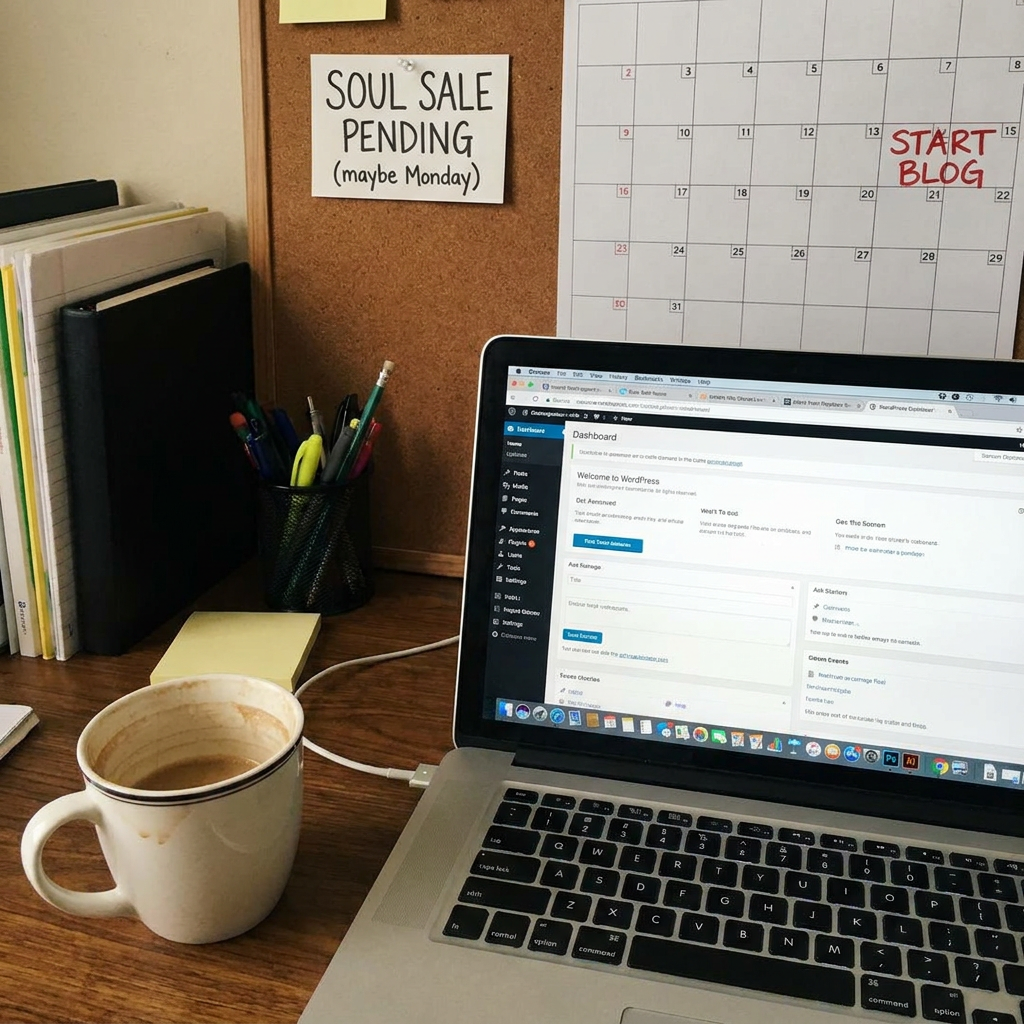
You’ve been thinking about starting a blog for six months. Maybe longer. You’ve got seventeen browser tabs open, a Notion doc full of niche ideas, and a very strong opinion that you’ll start “when things calm down.”
Things are not going to calm down.
Here’s the good news: starting a blog does not require a perfect niche, a professional logo, three months of content pre-written, or a deep spiritual understanding of your personal brand. It requires a domain, a hosting account, and the willingness to publish something imperfect before you feel ready.
This guide will get you from zero to live blog in one weekend. Not a beautiful, fully optimized, monetized machine — that takes longer and anyone who tells you otherwise is lying for clicks. But a real, functional, indexed blog that can start earning money within 90 days if you treat it seriously starting today.
Let’s go.
First: Why Blogging Still Works In 2026
Before we get into setup, let’s deal with the “is blogging dead?” crowd, because they come up every eighteen months like clockwork and they’re always wrong.
Blogging is not dead. What’s dead is bad blogging — thin content, keyword-stuffed nonsense, posts that exist only to rank and provide zero actual value. Google has been systematically destroying that kind of content for years and good riddance.
What’s very much alive: real, helpful, specific, well-written content from humans who actually know something about their topic. That kind of content ranks, earns trust, builds an audience, and makes money through affiliate links, ads, sponsored posts, and digital products.
The bar got higher. That’s good news if you’re willing to clear it.
Also: a blog you own is an asset. Your social media following is a rental. Every Instagram account, TikTok, and Twitter presence you’ve ever built is property you don’t own, subject to algorithm changes, bans, and platform implosions you have no control over. A self-hosted blog that ranks on Google is yours. That’s worth something that compounds over time in a way a follower count never will.
Step 1: Pick A Niche (In 24 Hours Or Less)
Niche selection paralysis is the single biggest reason people never start. So here are the rules:
You get 24 hours. Not two weeks. One day. Set a timer if you need to.
The right niche sits at the intersection of three things:
- People are already searching for it — there’s consistent demand
- Products or services exist that solve problems in that space — it can be monetized
- You can write about it without wanting to disappear — you have something genuine to say
You do not need to be the world’s foremost expert. You need to know more than a beginner, be willing to research what you don’t know, and have enough of a perspective to be interesting. That’s it.
Niches that consistently monetize well:
- Personal finance and money management
- Online income, blogging, and side hustles (hi)
- Software tools and tech reviews
- Health, fitness, and wellness
- Home improvement and DIY
- Pets
- Outdoor gear and adventure
- Food, recipes, and cooking
- Parenting
- Career advice and job searching
Niches that are hard to monetize no matter how popular they are:
- General motivation and positivity
- Memes and humor with no specific audience
- News commentary without a niche angle
- Extremely broad lifestyle content with no specific reader
The mistake most people make: picking a niche based purely on what they’re passionate about without checking if anyone is searching for it and whether anything can be sold to that audience. Passion is great. Passion that also makes money is better.
Pick the niche that sits at the overlap of “I can write about this” and “people will pay money in this space.” That’s your answer.
Step 2: Set Up Your Blog (The Right Way, Not The Cheap Way)
There are free blogging platforms — Blogger, WordPress.com free tier, Medium — and then there is the setup that actually gives you a real, ownable, monetizable asset.
Use self-hosted WordPress. This is the non-negotiable recommendation for anyone serious about blogging as an income source.
Here’s what you need:
A domain name(~$12–$15/year)Your URL. Something short, memorable, and relevant to your niche. Don’t spend more than 30 minutes on this. The domain matters less than the content on it. Get a .com if you can. Don’t hyphenate it. Don’t make it so clever nobody knows what it means.
Web hosting(~$35–$60/year for a starter plan)The server where your blog lives. For a new blog, you don’t need anything expensive. Hostinger, SiteGround, Bluehost, and Cloudways all work fine at the entry level. Most include one-click WordPress installation, which means you press a button and WordPress is live in about four minutes.
WordPress(free)The blogging platform that powers roughly 43% of the entire internet. Free, infinitely customizable, and the standard for serious bloggers and publishers worldwide.
A theme(free to start)The visual design of your blog. Astra, Kadence, and GeneratePress are all lightweight, fast, and have excellent free versions. Don’t buy a premium theme until you’ve published 10 posts and know you’re sticking with this. The theme is not your problem right now.
Your total weekend startup cost: under $75.
Anyone trying to sell you more than this before you’ve published your first ten posts is trying to upsell you on things that don’t matter yet.
Step 3: Configure The Basics (Don’t Over-Tinker)
Once WordPress is installed, here’s what you actually need to do before you publish your first post. Nothing else.
Install these plugins — and only these to start:
- Rank Math or Yoast SEO — helps you optimize posts for search without needing to know everything about SEO upfront
- WP Rocket or W3 Total Cache — speeds up your site (Google cares about page speed)
- UpdraftPlus — automatic backups because losing your work is a special kind of miserable
- Akismet — blocks comment spam before it starts
Set your permalink structure:Go to Settings → Permalinks → Select “Post name.” This makes your URLs clean (yourblog.com/post-title) instead of ugly (yourblog.com/?p=123). Do this before you publish anything.
Write your tagline:Go to Settings → General. Replace “Just another WordPress site” with something that actually describes what your blog is about. One sentence. Clear and specific.
Create your About page:A short explanation of who you are, what your blog covers, and who it’s for. This is one of the most-visited pages on any blog. Don’t skip it.
That’s it. Don’t spend the weekend installing seventeen plugins, customizing your color palette, or designing a logo. Every hour you spend tweaking the site is an hour you didn’t spend writing content. The content is what makes money. The design is what makes you feel busy.
Step 4: Write Your First Three Posts
Before you worry about traffic, SEO, or monetization, you need content. Here’s exactly what your first three posts should be:
Post 1: Your pillar postA comprehensive, genuinely helpful guide to the core topic of your blog. This is your “welcome to what this site is about” piece. Aim for 1,500–2,500 words. Not a quick introduction — a real resource that earns its place in search results. This is the post you’ll send people to first.
Post 2: A specific how-to guideA step-by-step post that solves one specific problem in your niche. “How to do [X]” with actual, actionable steps. This format ranks well because people search for exactly this kind of help.
Post 3: A list or roundup“Best [X] for [Y]” or “10 Ways to [Z]” — these posts have high search volume, are easy to skim, and naturally include affiliate links to products or services. This is usually your fastest path to your first affiliate commission.
The most important rule about your first three posts: publish them. Not when they’re perfect. Not when you’ve spell-checked them nine times. When they’re done. Done beats perfect every single time, because a published imperfect post can be improved, optimized, and updated. An unpublished perfect post earns nothing.
Step 5: Do The Minimum Viable SEO
You don’t need to be an SEO expert to get search traffic. You need to understand the basics and apply them consistently.
Keyword research before you write, not after:Every post should target a specific phrase people are actually searching for. Use free tools — Google’s autocomplete, AnswerThePublic, or the free version of Ubersuggest. Type your topic into Google and look at the “People also ask” and “Related searches” sections at the bottom. Those are real search queries from real people. Write posts that answer them.
One target keyword per post:Pick the most relevant phrase and use it naturally in your title, first paragraph, one subheading, and a few times in the body. Don’t stuff it in awkwardly. Google is smarter than that approach and will punish you for it.
Write titles that people actually want to click:Your post title is also your SEO headline. It should include your target keyword and be specific enough that someone searching for that topic knows immediately that your post is what they’re looking for. “How To Start A Blog” is vague. “How To Start A Blog With No Experience In One Weekend” is a post people click.
Internal linking from day one:Every new post you publish should link to at least one other post on your blog. This keeps readers on your site longer, helps Google understand your content structure, and distributes “SEO authority” across your whole site.
Step 6: Set Up Your Email List Immediately
This is the step most new bloggers skip and every established blogger wishes they hadn’t.
Start collecting email addresses before you feel like you have enough content to deserve an audience. There’s no threshold. The right time to start your email list is the same day you launch your blog.
Use Beehiiv, Kit (formerly ConvertKit), or MailerLite — all have solid free tiers for new lists. Add an opt-in form to your sidebar, your About page, and the bottom of every post. Offer something in exchange for the email if you can — a checklist, a template, a short guide — anything that solves one small problem for your reader.
Your email list is the single most valuable thing you will build alongside your blog. Social followers disappear. Search rankings fluctuate. Your email list is yours. Treat it like the asset it is from day one, even when it has eleven people on it.
Step 7: Monetize From The Start (Even With Low Traffic)
New bloggers often wait until they have significant traffic to think about monetization. This is backwards.
You should set up monetization infrastructure before you have traffic, so when traffic arrives, it immediately has somewhere to go.
Affiliate links in your content:Sign up for Amazon Associates and one relevant affiliate network (ShareASale, Impact, or PartnerStack depending on your niche). Add affiliate links to any product or tool you reference genuinely in your posts. You can earn your first commission with less than 100 monthly visitors if the right person clicks the right link.
Skip Google AdSense for now:Display ads require serious traffic to pay meaningful amounts. With under 10,000 monthly visitors, AdSense will earn you maybe $5–$15 a month and slow down your site in the process. Focus on affiliate income first — the earnings-per-visitor ratio is dramatically better.
Plan your first digital product:You don’t need to build it yet, but start thinking about what you could eventually sell directly to your audience. A template, a checklist, a short course, a swipe file. Something that costs you time once and can sell repeatedly. Plant this seed now even if you don’t harvest it for six months.
What A Realistic 90-Day Timeline Looks Like
Let’s be specific about what to expect, because vague optimism is how people quit at month two:
Month 1:You publish 8–10 posts. Google has started crawling your site. You have maybe 50–150 visitors total, mostly from you checking your own analytics. Your email list has your mom, two friends, and three strangers who stumbled in from Pinterest. Your affiliate earnings are $0–$12. This is normal. Keep going.
Month 2:You publish 8–10 more posts. A few start showing up in search results on pages 2–4. Traffic creeps up to 200–500 monthly visitors. Email list is growing slowly. First real affiliate commissions arrive — maybe $20–$80. This is also normal. Keep going.
Month 3:Older posts are gaining traction. Some are on page 1 for low-competition keywords. Monthly visitors hit 500–2,000. Email list is growing more consistently. Affiliate commissions are $50–$300 depending on your niche and how well you’ve integrated links. You have a real content asset that is visibly compounding.
These numbers assume consistent effort — not heroic effort. 8–10 posts per month, keyword-targeted, genuinely helpful, published without perfecting them to death.
The Only Thing That Actually Determines Whether This Works
There is one variable that separates bloggers who make money from bloggers who quit:
They kept publishing when nothing was happening.
That’s it. There’s no other secret. No hack. No shortcut. The algorithm rewards consistency and age. Your first 60 days of blogging are almost entirely invisible, and that invisibility is the filter that eliminates most people who try.
If you publish consistently for 90 days — real posts, targeted keywords, genuine value — you will have a blog that has a realistic shot at earning meaningful income. If you publish for three weeks, get frustrated that nothing happened, and stop, you will have a semi-built website that earns nothing and costs you hosting fees.
The gap between bloggers who make money and bloggers who don’t is almost never talent. It’s almost always tolerance for the slow part.
Start this weekend. Not when things calm down. Now.